热线:021-66110810,66110819
手机:13564362870


热线:021-66110810,66110819
手机:13564362870
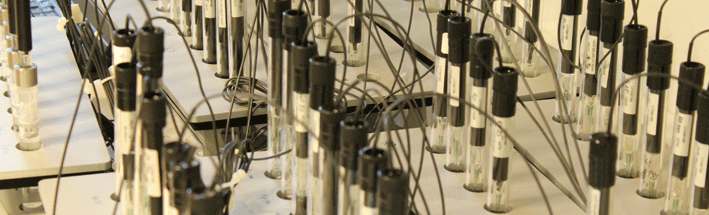
穿刺型电位微电极 电位针电极
原理 当电位电极和参比电极都浸入同一溶液中并连接到高阻抗毫伏计时,氧化还原电极尖端将相对于参比电极产生电势。该电势反映了溶液释放或吸收电子的趋势。也称为氧化还原电位(ORP)。Unisense氧化还原微电极可用于从0到完整海洋强度的盐度测量。
尖端尺寸
|
型号 |
尖端直径 |
|
RD-10 |
8-12 µm |
|
RD-25 |
20-30 µm |
|
RD-50 |
40-60 µm |
|
RD-100 |
90-110 µm |
|
RD-500 |
400-600 µm |
|
RD-500c |
400-600 µm(带内参比) |
|
RD-MR |
400-600 µm |
|
RD-N |
1.1mm |
|
RD-NP |
1.6mm |
|
技术参数 |
标准规格 |
定做 |
|
|
玻璃微电极 |
尖端直径 |
RD-10 (8-12 µm)
RD-500 c(400-600 µm) |
|
|
|
距尖端20毫米 直径 |
< 2 mm |
< 1 mm |
|
|
距尖端50毫米 直径 |
8 mm |
< 2 mm |
|
针电极 |
针长 |
40mm |
自定义 |
|
|
针直径 |
1.1mm |
自定义 |
|
所有电极 |
总长 |
150-200 mm |
70-350 mm |
|
|
玻璃轴直径 |
8 mm |
6-20 mm |
|
|
塑料保护套直径 |
11 mm |
|
|
|
电缆长度 |
1.5-2 m |
0-20 m |
|
|
接口 |
柠檬接口 |
|
|
|
内参比 |
RD-500c有 |
|
|
|
防水 |
实验室电极防水深2-3米 |
水下原位电极防深6000米 |
|
|
工作温度范围 |
-10o-60o |
|
|
|
尖端颜色 |
透明玻璃 |
涂黑 |
|
|
保证使用寿命 |
3个月内电极尖端无物理损伤不能测量可免费更换 |
|
|
|
预期使用寿命 |
大于1年,电极尖端越粗寿命越长 |
|
|
|
空间精度 |
等于微电极尖端直径 |
|
|
|
温度系数 |
2-3% / oC |
|
|
|
精度 |
0.1mv |
|
|
|
响应时间(90%) |
<10s(从pH 7到pH 4) |
|
The redox microelectrode measures the overall capacity of the sample to donate electrons to or receive electrons from the platinum surface at the tip of the electrode. For example, H2S is very good at donating electrons to the platinum, so if H2S is present, the redox potential will be low. O2, on the other hand, is very good at accepting electrons, so if O2 is present, the redox potential will be high. Dissolved metals, such as for example iron and manganese, will also affect the redox potential. The reduced form of Fe and Mn ions will give a low redox potential, and the oxidized forms will give a high redox potential.
氧化还原微电极测量样品向电极尖端的铂表面提供电子或从铂表面接受电子的总体能力。例如,硫化氢(H₂S)非常善于向铂提供电子,因此如果存在硫化氢,氧化还原电位就会较低。另一方面,氧气(O₂)非常善于接受电子,因此如果存在氧气,氧化还原电位就会较高。溶解的金属,例如铁和锰,也会影响氧化还原电位。铁离子和锰离子的还原态会产生较低的氧化还原电位,而氧化态会产生较高的氧化还原电位。
The EP microelectrode is a micro reference electrode which is shielded against electrical noise. It measures the difference in electrical potential between the tips of the EP and the reference electrode. It is not affected by the presence of H2S, O2, or the metal ions mentioned above. It only measures the electrical potential difference.
EP微电极是一种屏蔽电噪声的微型参比电极。它测量EP电极尖端与参比电极尖端之间的电位差。它不受硫化氢、氧气或上述金属离子存在的影响。它仅测量电位差。
I should also mention that the redox microelectrode also measures the electrical potential difference between the tips of the redox and the reference electrode. However, the electrical potential is normally very small compared to the redox potential differences. For example, the change in redox potential in a sediment profile is often from several hundred mV in the O2 containing water above the sediment to minus several hundred mV in the H2S containing part of the sediment - see the graph below which is from the attached Tankéré et al. paper. The difference in electrical potential is often just a few mV or even below 1 mV - see graph below and the attached Damgaard et al. paper.
我还应该提到,氧化还原微电极也测量氧化还原电极尖端与参比电极尖端之间的电位差。然而,与氧化还原电位差相比,电位通常非常小。例如,沉积物剖面中的氧化还原电位变化通常是从沉积物上方含氧水中的几百毫伏到沉积物含硫化氢部分的负几百毫伏——见下面的图表,该图表来自所附的坦克雷等人的论文。电位差通常只有几毫伏,甚至低于1毫伏——见下面的图表和所附的达马加德等人的论文。